The 2009 Toyota Corolla has more NHTSA complaints than any other Corolla model year: 1,450 as of October 24, 2026. The 2010 is second with 1,238, and the 2005, 2006 and 2007 sit close together at 848, 837 and 832. About a quarter of the 2009's complaints, 379, mention Takata or the air bag inflator, and most of those come from owners who had a recall notice and no part yet.
These are raw counts across 11,198 complaints for the 1995 through 2026 Corolla. They aren't adjusted for sales, and owners decide whether to file.
Which Corolla years have the most complaints?
| Model year | NHTSA complaints |
|---|---|
| 2009 | 1,450 |
| 2010 | 1,238 |
| 2005 | 848 |
| 2006 | 837 |
| 2007 | 832 |
| 2003 | 714 |
| 2011 | 584 |
| 2004 | 474 |
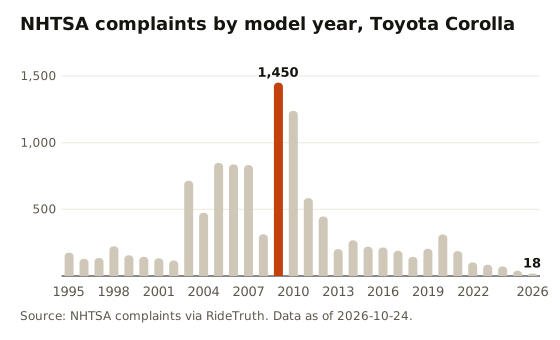
The 2003 through 2011 Corollas account for most of the high years. Before 2003, no year passes 225, and from 2013 on, only the 2020 passes 300.
Why are there so many air bag complaints on the 2009?
Airbags & Restraints is the area named most on the 2009, in 560 of 1,450 complaints.
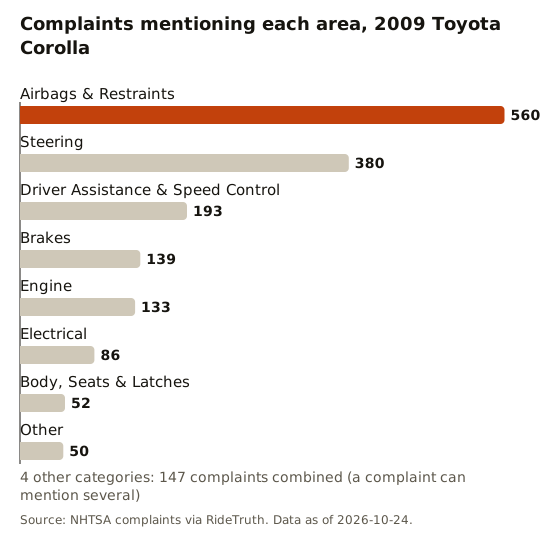
Of the 2009's complaints, 379 mention Takata or the air bag inflator, and 287 of those also mention parts, waiting or a repair not yet done. Some owners say they were told to keep the front passenger seat empty until the part arrived. The rest of the area is different: NHTSA's Airbags & Restraints records for the 2009 list 61 crashes, 54 injuries and 1 death, so not every air bag complaint is about the recall queue. The 2010 has 286 Takata or inflator complaints, and the 2005 has 163.
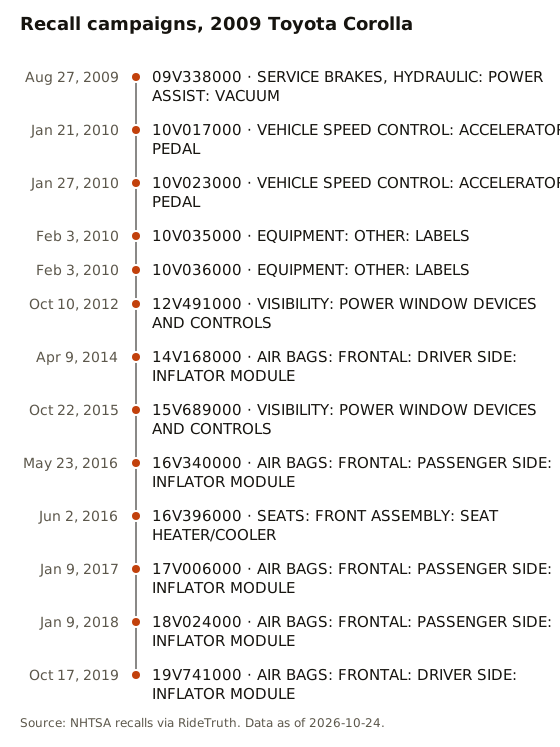
The 2009 has 13 recall campaigns on file. Five, filed between 2014 and 2019, are listed under the air bag inflator module; one of those, 14V168000, is actually for the wiring that connects the driver's air bag through the steering column, NHTSA's record shows. A used Corolla from these years should have every one of them completed. A VIN check settles that.
What about the steering on the 2009 and 2010?
Steering is named in 380 of the 2009's complaints and 368 of the 2010's. I searched those narratives: 179 of the 2009's and 156 of the 2010's describe the car wandering, drifting or pulling, or the steering feeling loose.
And the acceleration complaints?
Driver Assistance & Speed Control is named in 193 of the 2009's complaints, with 66 crashes reported among them. The 2009 was part of Toyota's accelerator pedal recalls: campaigns 10V017000 and 10V023000, filed in January 2010, both list it.
Which Corolla years have the fewest complaints?
Among Corollas built from 2003 through 2021, the 2018 is lowest with 143, then the 2021 with 187 and the 2017 with 189. The 2022 through 2026 are lower still, from 102 down to 18, but they're young. Before 2003, the counts are low too, though complaint filing was rarer then.
Which Corolla years should you avoid?
On the record, the 2009 and 2010 deserve the most care, then the 2005 through 2007. On any of them, confirm every air bag campaign was completed and pay attention to how the car tracks on the highway during your test drive.
Run the VIN through NHTSA's recall lookup before you pay. If you'd rather buy new, the 2026 Corolla hybrid is fifth in our most fuel-efficient cars list. Either way, RideTruth's garage can track the car for new campaigns.