I pulled every NHTSA complaint and recall campaign on file for 21 model years, the 2020 through 2026 RAV4, CR-V and Tucson, and lined them up against EPA's fuel economy ratings. The RAV4 sells far more than the other two, though, so a bigger count here doesn't mean a worse car. Wherever I can, I compare each model against its own other years.
Start with the Tucson. The 2021 has 77 complaints and one recall, the fewest complaints of any Tucson year. EPA rates it at 23 to 25 MPG. At 12,000 miles a year and $4.32 a gallon, that's $2,074 to $2,254 in fuel, up to $958 more than a 2021 RAV4 Hybrid. The fuel math is below.
Which RAV4, CR-V and Tucson years have the most complaints and recalls?
| Model year | Model | NHTSA complaints | Recall campaigns | EPA combined MPG |
|---|---|---|---|---|
| 2020 | RAV4 | 646 | 6 | 27 to 40 |
| 2021 | RAV4 | 404 | 1 | 28 to 40 |
| 2022 | RAV4 | 149 | 2 | 28 to 40 |
| 2023 | RAV4 | 160 | 3 | 28 to 40 |
| 2024 | RAV4 | 173 | 4 | 28 to 39 |
| 2025 | RAV4 | 99 | 4 | 28 to 39 |
| 2026 | RAV4 | 28 | 1 | 38 to 43 |
| 2020 | CR-V | 427 | 9 | 29 to 38 |
| 2021 | CR-V | 427 | 5 | 29 to 38 |
| 2022 | CR-V | 326 | 6 | 29 to 38 |
| 2023 | CR-V | 628 | 7 | 29 to 40 |
| 2024 | CR-V | 472 | 4 | 29 to 40 |
| 2025 | CR-V | 272 | 4 | 28 to 40 |
| 2026 | CR-V | 132 | 1 | 29 to 40 |
| 2020 | Tucson | 176 | 1 | 23 to 25 |
| 2021 | Tucson | 77 | 1 | 23 to 25 |
| 2022 | Tucson | 499 | 3 | 26 to 38 |
| 2023 | Tucson | 175 | 2 | 25 to 38 |
| 2024 | Tucson | 143 | 4 | 25 to 38 |
| 2025 | Tucson | 412 | 7 | 26 to 38 |
| 2026 | Tucson | 82 | 5 | 26 to 38 |
Data as of September 16, 2026. Each owner complaint counts once, even when it names several parts. Recall campaigns are counted by NHTSA campaign number, and one campaign often covers several model years, so the recall column doesn't add up to a total. The MPG range runs from the thirstiest version EPA rated that year to the most efficient, hybrids included. Plug-in hybrids are listed at their gas-only rating.
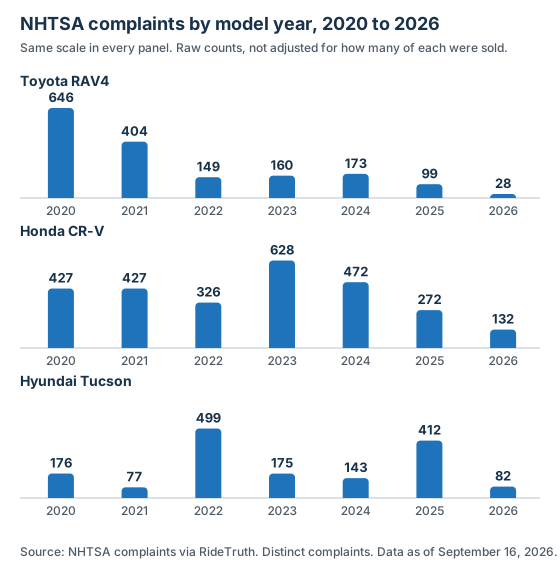
The pattern that matters is inside each panel. The CR-V and Tucson peaks land on the first year of a new generation: the 2023 CR-V (sixth generation) and the 2022 Tucson (fourth). The RAV4's peak is the 2020, the fifth generation's second US model year. The newest years sit low mostly because they haven't been on the road long.
Doesn't the RAV4 just sell more?
Yes, by a lot. Toyota sold 479,288 RAV4s in the US in 2025. Honda sold over 400,000 CR-Vs, and Hyundai sold 234,230 Tucsons. So the Tucson's 499 complaints for 2022 come from a much smaller fleet than the RAV4's 646 for 2020. Automakers don't publish sales by model year, so I can't turn these into a clean rate per 100,000 cars, and this post doesn't rank the three brands against each other. RideTruth's methodology notes explain why a complaint count isn't a failure rate.
Why does the 2020 RAV4 have the most RAV4 complaints?
The engine and fuel system. Of the 2020 RAV4's 646 complaints, 195 (30.2%) name the engine and 91 (14.1%) the fuel system. Two of its six recall campaigns point the same way. Campaign 20V064000 covers 2019 and 2020 RAV4s with the 2.5-liter engine, where porosity in the engine casting can crack and leak coolant; dealers inspect the engine and replace it if needed. Campaign 20V682000 replaces a fuel pump that can fail.
The 2021 moved on to a different problem. Airbags and restraints lead its complaints at 143 (35.4%), and its one recall, 23V865000, covers the front passenger occupant-classification sensor. A short in that sensor can keep the passenger airbag from deploying. The same recall covers the 2020.
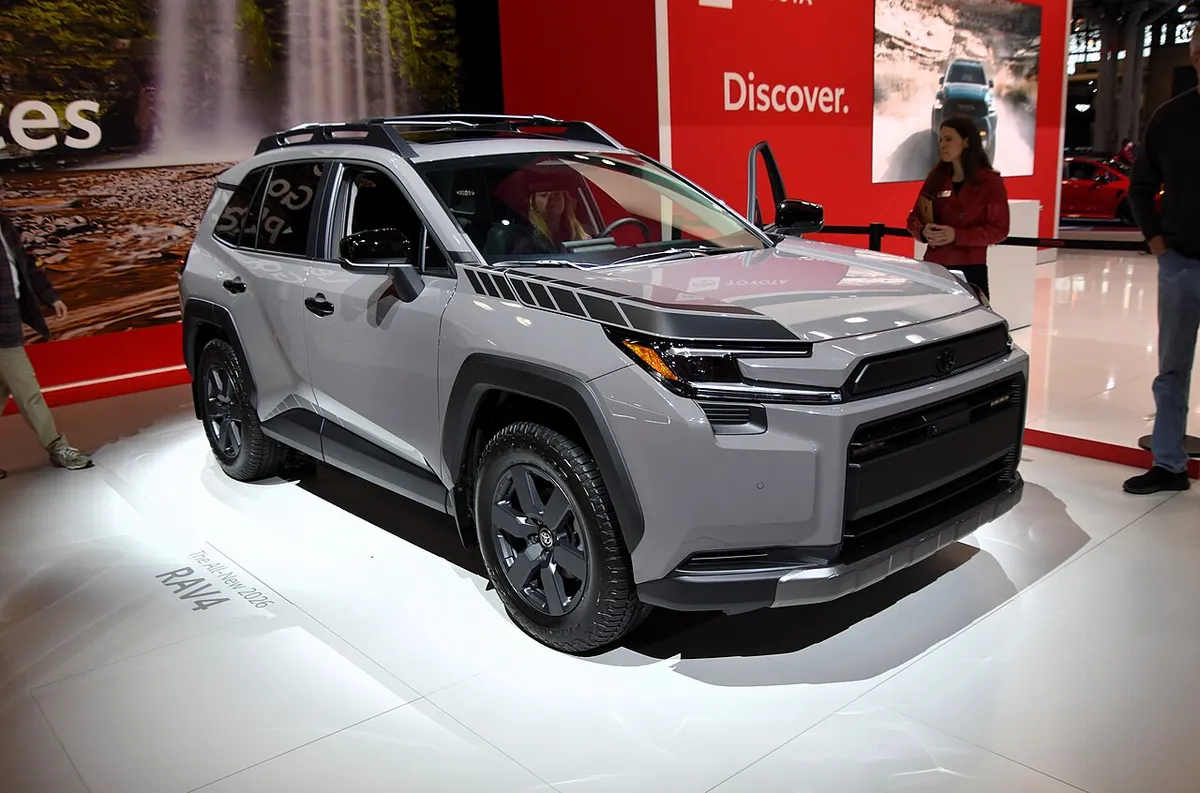
From 2022 to 2025, RAV4 complaints stay between 99 and 173 a year. The 2026 is a new generation, and every version EPA has rated so far is a hybrid, so it's the one year here without a gas-only model.
What happened to the 2023 CR-V's steering?
Steering comes up in 395 of the 2023 CR-V's 628 complaints, or 62.9%, the biggest single-area share of any year I broke down for this post. Honda's recall, campaign 24V744000, says the steering gearbox may have been built with too much internal friction, which can make the car hard to steer. It covers 2023 to 2025 CR-Vs, so the 2024 (472 complaints) and the 2025 share it. The dealer fix is a new worm gear spring and fresh grease, free.
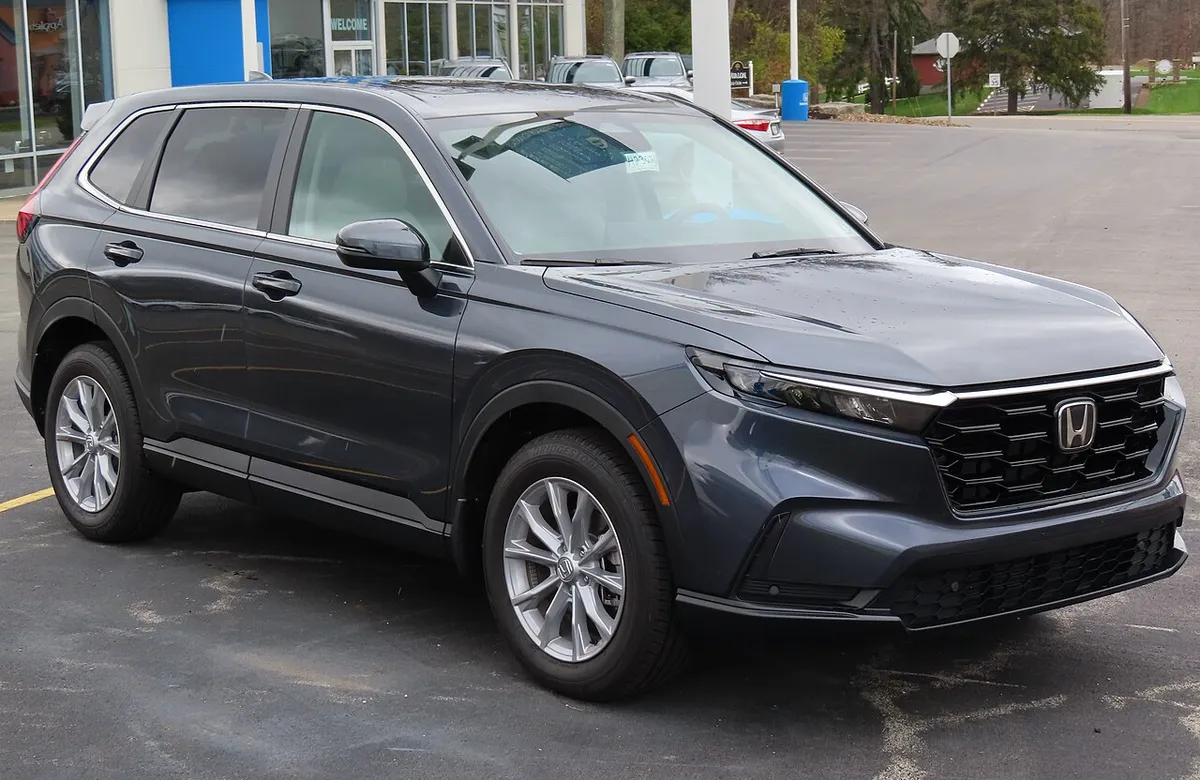
The 2020 CR-V has a different record: nine recall campaigns, the most of any year in the table, from a fuel pump (23V858000) to 12-volt battery parts and a seat belt buckle. Its complaints lead with driver-assistance systems at 100 (23.4%). If you're weighing a 2019 as well, our 2019 CR-V breakdown covers it.
Which Tucson years should I check first?
Two of them, for different reasons. The 2022 has 499 complaints, and they cluster under the hood: 159 name the engine (31.9%) and 157 the fuel system (31.5%). None of its three recall campaigns covers either.
The 2025 is the one to watch. It already has 412 complaints, and 241 of them name driver-assistance systems. It also has seven recall campaigns, the most of any Tucson year:
- 25V549000: connecting-rod bolts may not have been tightened properly; dealers replace the engine.
- 26V316000: front-camera software can make automatic emergency braking kick in early and brake unexpectedly. A software update fixes it.
- 26V047000 and 26V400000: instrument-panel display problems. The newer one can make the display fail; the fix is a software update, over the air or at a dealer.
- 24V691000 (labels), 24V877000 (wiring) and 25V809000 (side curtain airbag).
That camera recall lines up with what owners wrote in: most 2025 Tucson complaints name driver-assistance systems, the group that includes automatic braking. Check that the update has been done on any 2025 you look at. The 2025 Tucson page lists every campaign with its date. The 2026 shares four of these campaigns and adds a side-impact airbag sensor recall.
How much more gas does the older Tucson burn?
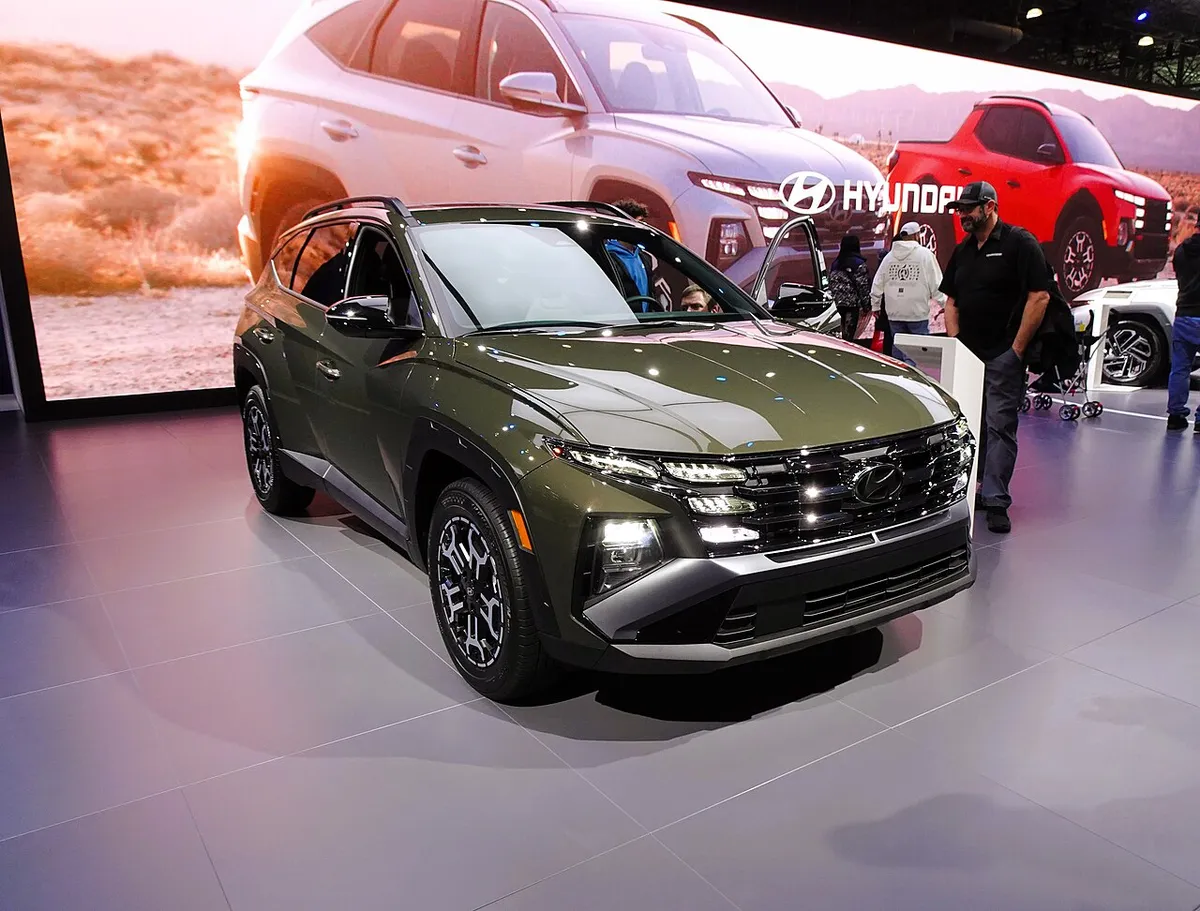
The 2020 and 2021 Tucsons share a single recall, 20V543000, for the antilock brake module, and neither passes 176 complaints. Their weak spot is the fuel bill: EPA rates both at 23 to 25 MPG combined, the lowest here.
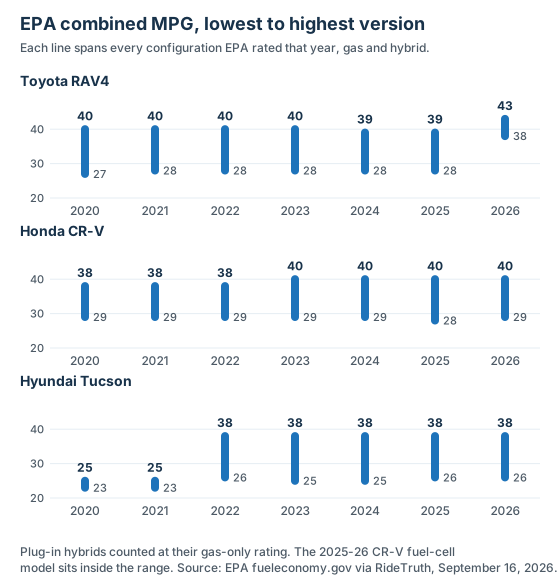
Here's what that costs over 12,000 miles a year at $4.32 a gallon, EPA's current national price for regular (fueleconomy.gov, checked September 22, 2026):
| 2021 model and EPA combined MPG | Gas per year |
|---|---|
| Tucson, 23 MPG | $2,254 |
| Tucson, 25 MPG | $2,074 |
| RAV4 gas, 30 MPG | $1,728 |
| CR-V gas, 30 MPG | $1,728 |
| CR-V Hybrid, 38 MPG | $1,364 |
| RAV4 Hybrid, 40 MPG | $1,296 |
The math is miles ÷ MPG × price per gallon. Against a 2021 RAV4 Hybrid, the older Tucson spends $778 to $958 more a year, roughly $3,900 to $4,800 over five years. Against a gas RAV4 or CR-V the gap is $346 to $526 a year. A hybrid usually costs more to buy, and I don't have price data, so set that gap against the price difference you're actually quoted. Put in your own miles and local gas price with the fuel cost calculator.
Buying new, the spread shrinks. The 2026 RAV4 Hybrid's best rating is 43 MPG ($1,206 a year on the same terms), the CR-V Hybrid's 40 ($1,296) and the Tucson Hybrid's 38 ($1,364). A gas-only 2026 Tucson at 26 to 28 MPG runs $1,851 to $1,994.
What should I check on the year I'm shopping?
Run the VIN at NHTSA's recall lookup and ask for proof the fix was done. That matters most on a 2023 to 2025 CR-V (steering) and a 2025 or 2026 Tucson (engine bolts and the braking camera). A campaign listed for a model year may not include every VIN.
To see two of these side by side, compare the 2026 RAV4 and 2026 CR-V on complaints, recalls and EPA fuel economy, then swap in the years you're considering. Every model year is on the RAV4, CR-V and Tucson hubs.